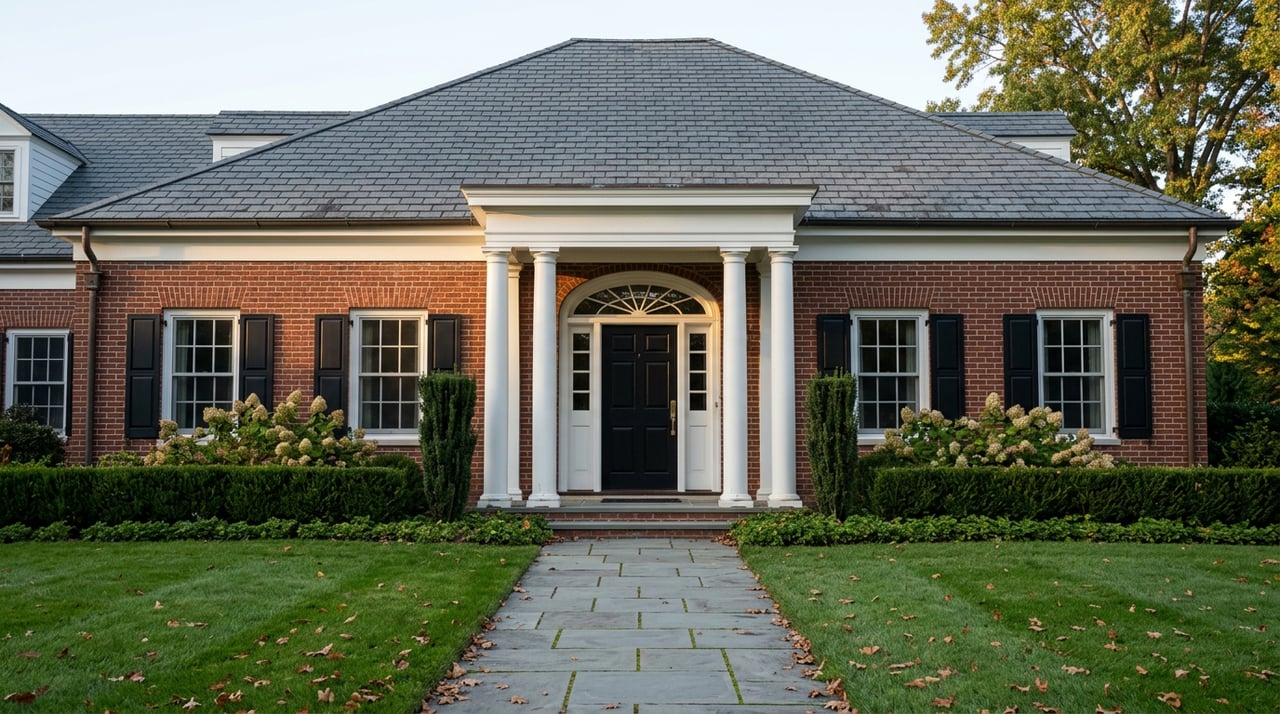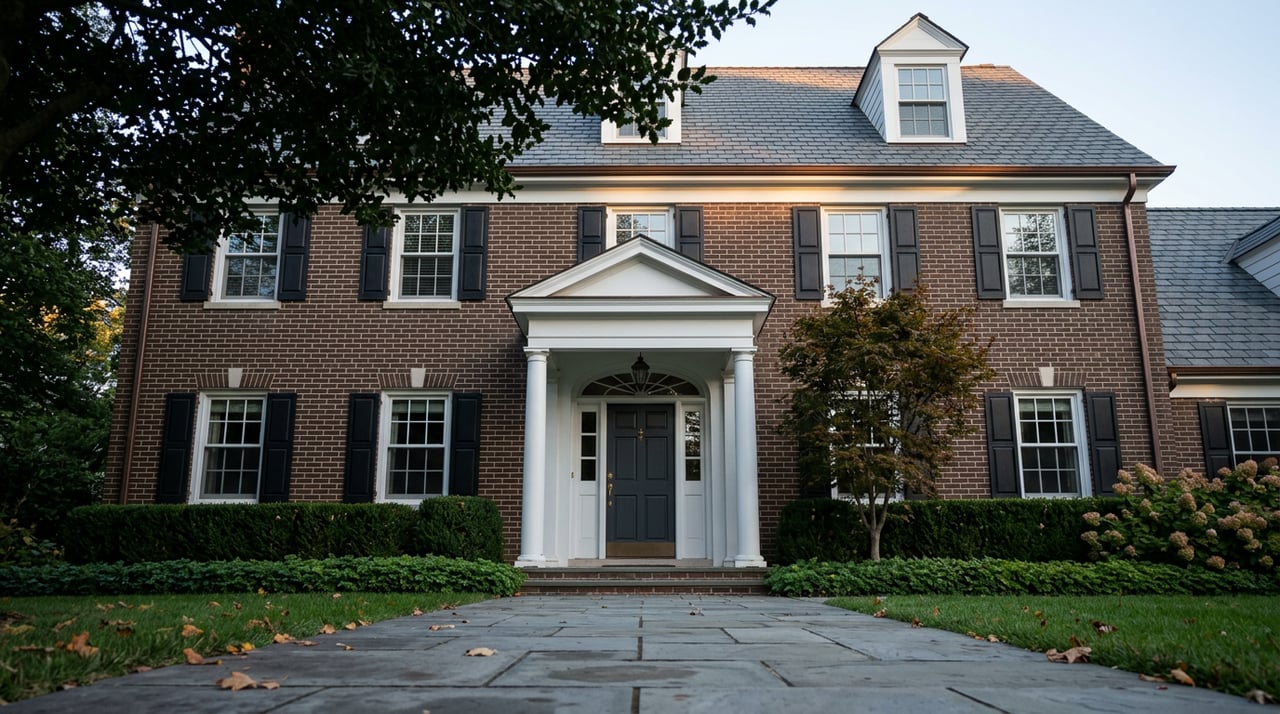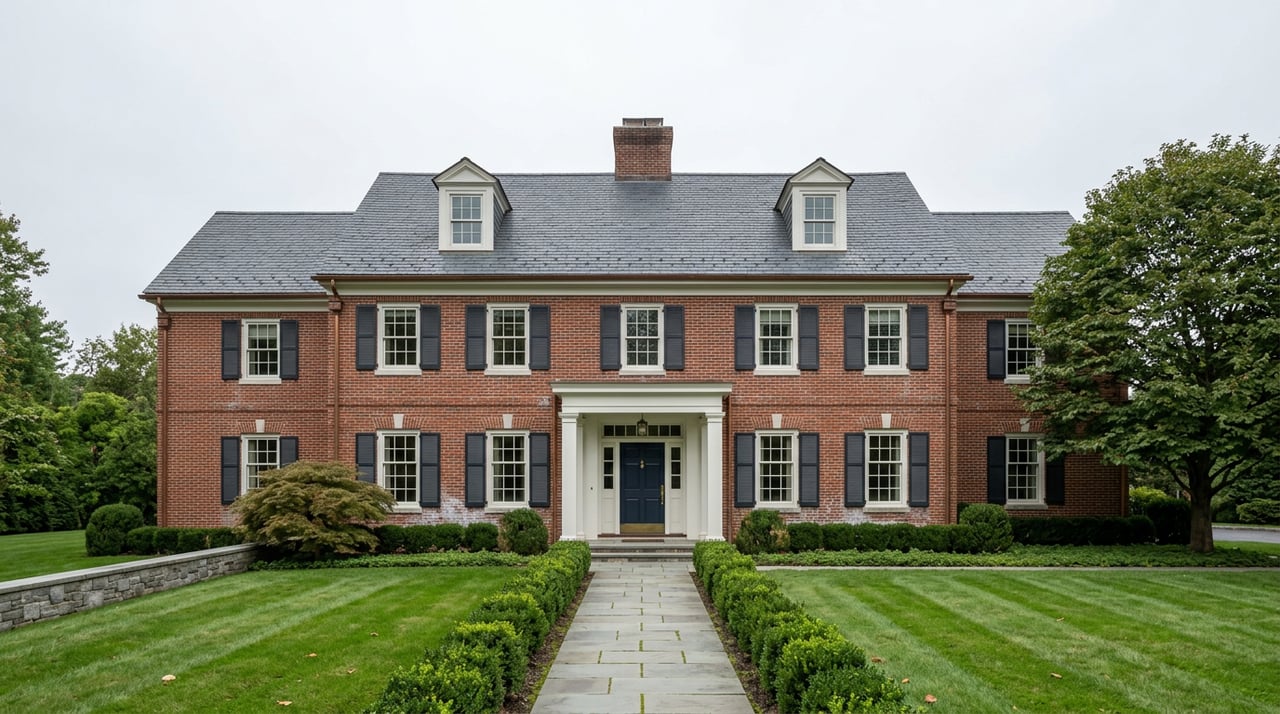
Search "Locust Valley homes for sale" and the results won't make sense at first glance. One listing sits on a quarter acre near the water with a bring-your-beach-chair kind of charm. Another sits on four or five acres behind a gate, with a circular drive and a guest cottage. Both carry the same place name. Both, technically, feed the same schools. And their price tags can differ by a factor of ten.
That isn't a data error. It's the shape of the market itself.
The name on the mailbox isn't the name that sets the price
The Locust Valley Central School District doesn't serve one town. Its own enrollment map, published on the district's website, lists seven separate place names: Bayville, the Brookville villages, Lattingtown, Locust Valley itself, Matinecock, Mill Neck, and Muttontown. A family can live in any of those seven places, send their kids to the same elementary school, and still be buying into a completely different real estate market, because the school district boundary and the municipal boundary were never meant to be the same line.
Two of those places, Lattingtown and Bayville, sit at opposite ends of the pricing spectrum, and the reason has almost nothing to do with the schools. It has to do with what each village's own zoning code allows you to build.
Lattingtown is an incorporated village with its own mayor, trustees, and zoning ordinance, and that ordinance sets minimum lot sizes at two to three acres for most residential parcels. You cannot buy a small lot in Lattingtown because small lots aren't zoned to exist there. As of June 2026, homes listed for sale in Lattingtown carried a median asking price of roughly $1.92 million, at about $566 per square foot. That number isn't a reflection of buyer appetite so much as a reflection of what the village's own code requires every parcel to be.
Bayville, also its own incorporated village, went the opposite direction. Its housing stock runs to quarter-acre beach lots, raised ranches, and colonials packed close enough together that some residents share private beach paths with dozens of neighbors on the same stretch of sand. One listing this year advertised access to a private beach shared among only sixty residences, on a lot small enough that the whole property, house included, would fit inside a single acre several times over. Over the three months ending in May 2026, the median sale price in Bayville was about $723,000, at roughly $425 per square foot, a fraction of what the exact same school district commands two villages away.
The zip code makes it worse, not better
Here's the detail that trips up most out-of-town buyers, and even some who've lived on Long Island for years: Lattingtown and Matinecock don't just share a school district with unincorporated Locust Valley. They share its zip code, 11560. Bayville doesn't. Bayville has its own zip, 11709, despite feeding the identical schools.
That means a buyer who filters a portal search by zip code 11560 will see the hamlet's cottages side by side with Lattingtown's multi-acre estates and Matinecock's private compounds, all blended into one average, and will never see a single Bayville listing, even though a Bayville house sends its kids to the same middle school as a house three streets over in unincorporated Locust Valley. Flip the search to the place name "Locust Valley" instead of the zip code, and depending on how the portal geocodes the area, you can end up pulling in some, none, or all of that same Bayville inventory. Neither search method gives you the whole district. Both give you a number that looks precise and means less than it appears to.
The average home value most often quoted for "Locust Valley" as of July 2026, around $1.25 million, up about 5 percent over the prior year, is really a blend across that 11560 zip code. It folds Lattingtown's acreage into the same figure as smaller homes in the unincorporated hamlet. It is a real number. It is just not the number that tells you what any specific house is likely to cost.
What actually differs, village by village
| Community | Governing status | What the zoning tends to produce | Recent price signal |
|---|---|---|---|
| Lattingtown | Incorporated village, own zoning code | Two to three acre minimum lots, estate-scale homes | Median list ~$1.92M, $566/sqft (June 2026) |
| Bayville | Incorporated village, own zoning code | Quarter acre and smaller coastal lots, cottages and colonials | Median sale ~$723K, $425/sqft (spring 2026) |
| Unincorporated Locust Valley | No separate village government | Mixed lot sizes, no acreage floor | Average value ~$1.25M across shared 11560 zip (July 2026) |
The village layer also changes what you'll owe every year, separately from the school tax that funds the district all seven communities share. One Bayville listing this year noted a total tax bill, including village tax, of just over $9,000, a figure tied to a specific exemption running through 2030 rather than a typical number for the area, but it's a useful reminder that the village tax sits on top of, and apart from, the shared school levy. Lattingtown and Bayville each set and collect their own village tax. Unincorporated Locust Valley has no village government at all, so that particular layer simply doesn't apply there.
One ballot the whole district votes on together
If the villages are this different, what actually ties them into one place, worth calling by one name? The answer showed up clearly this spring.
In May 2026, voters across the entire Locust Valley Central School District, from Lattingtown's estate owners to Bayville's cottage owners, went to the polls on a proposed $100.25 million budget for the 2026-27 school year, carrying a 2.1 percent tax levy increase. It failed, by a vote of 850 to 765, as Patch reported at the time. A companion measure updating transportation policy, extending bus service eligibility out to an 18-mile radius, passed easily in the same vote.
The district went back to the drawing board and came back with a trimmed $99,987,243 budget carrying a lower 1.78 percent levy increase, plus a $2.5 million transfer for school safety projects, and put it to a revote on June 16, 2026. That vote was held simultaneously at three sites spread across the district's geography: Bayville Intermediate School, MacArthur Primary School, and the Brookville Reformed Church. Earlier in the year, the district had also detailed over $10 million in capital projects for the 2026-27 budget, including a flat roof replacement at Bayville Intermediate and window and curtain wall replacements across two buildings, spending decisions that every taxpayer in all seven communities helps fund together, according to reporting from Long Island Press.
That's the actual thread connecting a $723,000 Bayville cottage to a $1.92 million Lattingtown colonial. Not price. Not lot size. A shared ballot.
What this means if you're comparing listings
If you're shopping the North Shore and "Locust Valley" keeps surfacing homes that don't seem to belong in the same conversation, that's not a search filter malfunctioning. It's an accurate reflection of a district that was drawn around school enrollment, not around zoning or price.
A few things worth asking before you fall in love with a number:
- Which incorporated village actually governs this specific parcel, and what does its own zoning code allow?
- Is the property inside a village with its own tax levy, or in the unincorporated hamlet where that layer doesn't exist?
- Does the zip code on the listing match the school district you think you're buying into, or does it just happen to overlap with it?
None of that shows up in a median price pulled from a zip code search. It shows up in knowing the seven communities well enough to know which one you're actually standing in.
FAQ
Does a Bayville address mean different schools than a Lattingtown address? No. Both feed the Locust Valley Central School District. What differs is the village government layered on top, its zoning code, and its own separate tax levy.
If I search zip code 11560, will I see every home in the school district? No. Bayville carries its own zip code, 11709, so a search limited to 11560 will miss Bayville's listings entirely, even though those homes are zoned into the same district.
Are property taxes the same across the whole district? No. Lattingtown and Bayville each set their own village tax, separate from the shared school levy. Unincorporated Locust Valley has no village government, so that particular tax layer doesn't apply there at all.
If you're trying to figure out which of these seven communities actually fits what you're picturing, that's exactly the kind of local detail worth a real conversation instead of another portal search. Raquel Knoell and Team Knoell work this stretch of the North Shore village by village, not zip code by zip code. Reach out for a consultation, or start with a free Instant Home Valuation to see where your own numbers actually land.